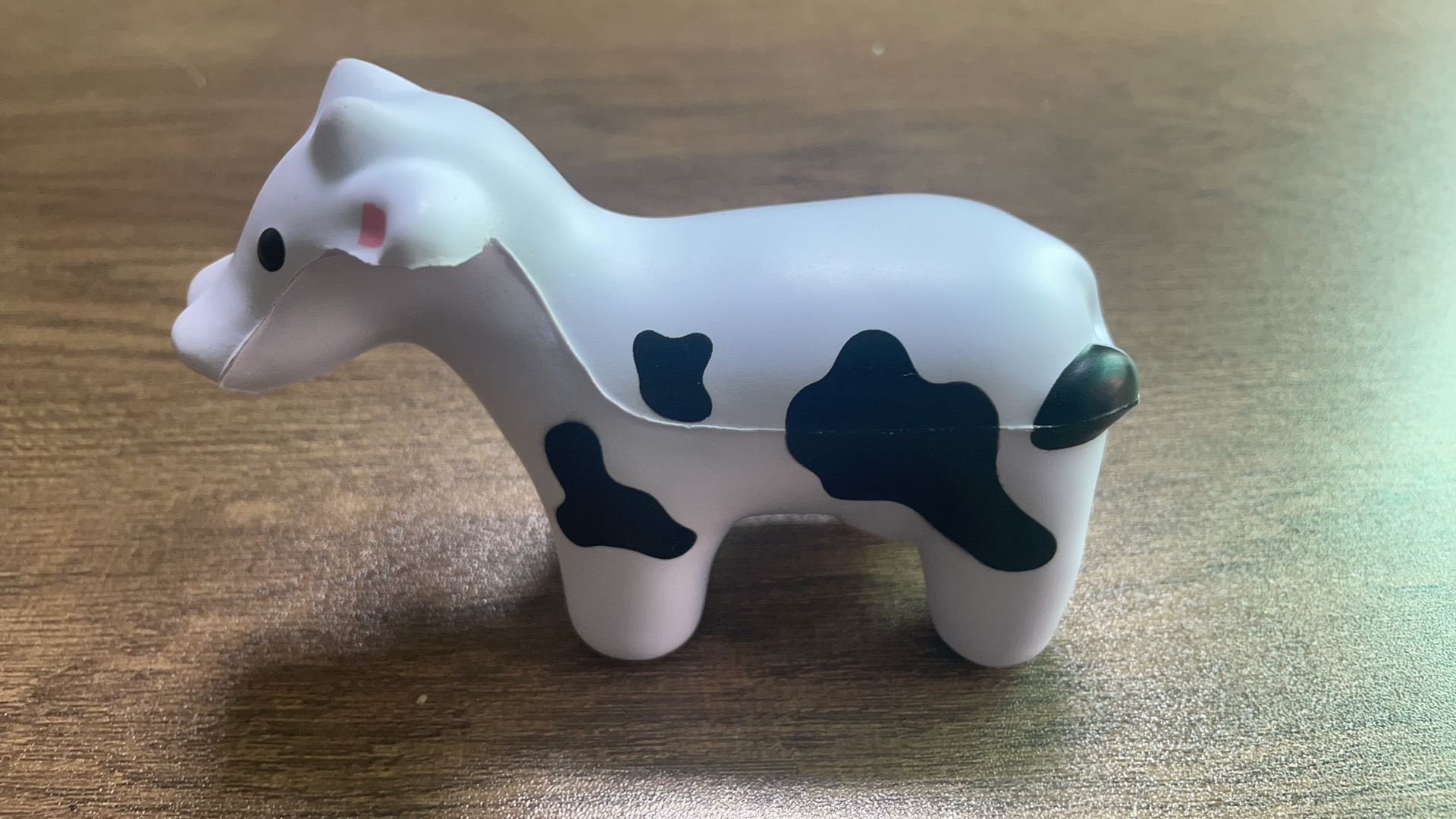
Short answer: The cost of a custom PU foam product depends mainly on its weight, product design, mold and tooling requirements, painting complexity, additional components, quality standards, and production quantity.
For simple products, material consumption may be the main cost driver. For highly detailed PU foam figurines, however, painting and manual finishing can account for a significant part of the total manufacturing cost. Complex molded products may also require more expensive tooling, additional assembly, and more production time.
Because every custom polyurethane foam product is different, there is no universal price per piece.
At Ifoama, we evaluate the complete product and manufacturing process before providing a quotation. This allows us to determine the actual cost drivers and recommend an appropriate production solution.
What Determines the Price of a Custom PU Foam Product?
The main factors that determine the manufacturing cost of a custom polyurethane foam product are:
Product weight – affects polyurethane material consumption.
Product shape and complexity – affects tooling, molding, trimming, and finishing time.
Mold development – custom products usually require dedicated tooling.
Painting and artwork – detailed designs require substantially more manual labor.
Additional components – metal, plastic, or other inserts can increase assembly complexity.
Quality requirements – stricter cosmetic standards can increase inspection, rework, and rejection rates.
Production quantity – tooling and development costs can be distributed across more units at higher volumes.
Understanding these factors is important when comparing quotations from different PU foam manufacturers.
1. Product Weight
Product weight is one of the basic factors affecting the cost of molded polyurethane foam products.
In general, a heavier product requires more PU raw material and therefore has a higher material cost.
For example, a 50-gram PU foam product will consume significantly less material than a similar product weighing 500 grams.
Weight can also influence other manufacturing costs. Larger and heavier products may require larger molds, more handling, longer production cycles, and additional packaging materials.
However, weight alone does not determine the final price.
Two products with the same weight can have completely different manufacturing costs if one has a simple shape and the other requires complex molding, detailed painting, or internal components.
Therefore, product weight should be considered the starting point of PU foam pricing, not the entire pricing formula.
2. Product Shape and Design Complexity
The complexity of the product geometry is another major cost factor.
A simple PU foam component may have:
A straightforward mold structure
Easy demolding
Minimal trimming
Simple surface finishing
A complex product may contain:
Deep grooves
Undercuts
Multiple curved surfaces
Fine textures
Thin sections
Irregular shapes
Small decorative details
Multiple connected components
These features can increase manufacturing costs at almost every stage.
Mold development
Complex designs require more engineering and machining work.
Demolding
Some shapes are more difficult to remove from the mold without damaging the foam.
Trimming
Complex products often require more manual trimming after molding.
Surface finishing
Products with detailed surfaces may require additional sanding, repair, or preparation.
Painting
Irregular surfaces can make masking and painting more time-consuming.
For this reason, a complex PU foam product can cost considerably more than a simple product of similar size and weight.
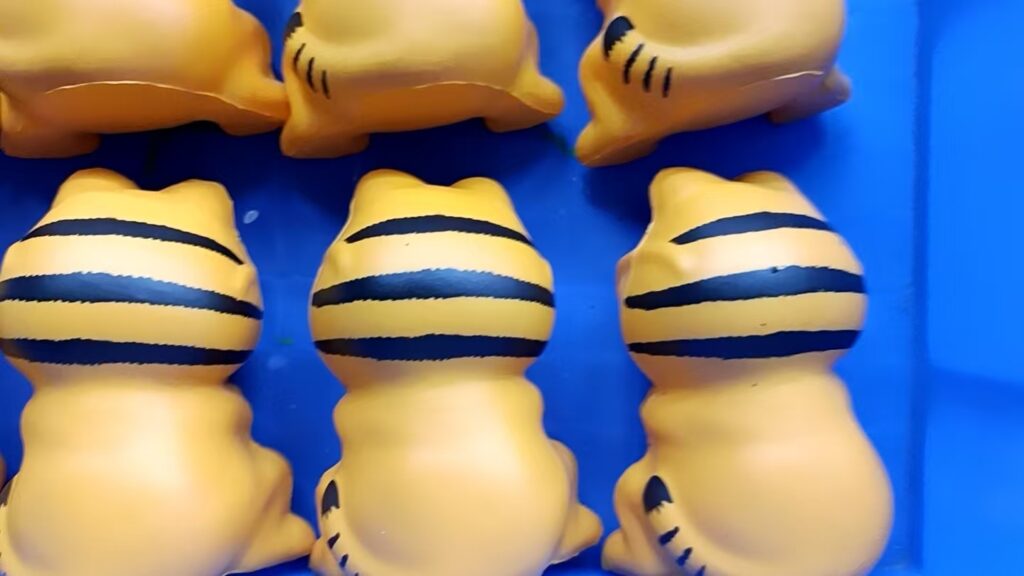
PU Foam Tiger
3. PU Foam Mold and Tooling Costs
Most custom polyurethane foam products require dedicated molds.
A typical product development process may include:
3D drawing → prototype → mold development → trial production → process adjustment → mass production
Customers may provide 3D files such as:
STP
STEP
STL
Depending on the project, a prototype may first be produced using 3D printing so that the product shape and dimensions can be reviewed before production tooling is made.
The production mold itself can represent a significant part of the initial project investment.
Mold costs depend on factors such as:
Product dimensions
Geometry
Number of mold components
Surface details
Demolding requirements
Expected production volume
Required mold life
Aluminum is commonly used for many PU foam molds, while steel may be selected for certain applications where durability and production volume justify the additional tooling investment.
For this reason, PU foam mold cost should always be considered together with the expected production quantity.
4. Painting and Artwork Complexity
For many PU foam figurines, toys, promotional products, and decorative items, painting can be one of the most important cost factors.
A product may require:
Primer
Base coating
Multiple colors
Masking
Color separation
Shading
Gradients
Fine detail painting
Logo application
Final touch-up
A simple one-color product can usually be processed much faster than a highly detailed figurine.
For example, imagine two PU foam figures with the same dimensions and weight.
Figure A has two solid colors and a simple design.
Figure B has ten colors, detailed facial features, shadows, gradients, and small decorative patterns.
The raw foam material cost may be similar, but Figure B can require significantly more labor.
This is why, for custom PU foam figurines, the value of the product may be driven more by artwork and finishing than by the amount of foam used.
When requesting a quotation, providing the final artwork or color reference can therefore help the manufacturer estimate the actual labor involved.
5. Additional Metal and Plastic Components
Some custom polyurethane foam products contain more than foam.
Depending on the design, manufacturers may need to install components such as:
Metal hardware
Plastic parts
Internal supports
Screws
Inserts
Mounting components
Structural components
These parts may need to be positioned inside the mold before the polyurethane foam is formed.
This adds additional manufacturing operations, including:
Preparing the components
Positioning the components
Fixing them in the correct location
Molding the polyurethane foam
Checking the finished product
Completing any required assembly
The more operations required, the more labor and process control are needed.
Additional components can also increase the risk of production defects.
This is particularly important for certain integral skin polyurethane foam products, where the foam combines structural or decorative components into a finished molded part.
6. Quality Requirements and Rejection Rate
Quality requirements have a direct relationship with manufacturing cost.
A product intended for general commercial use may allow minor cosmetic imperfections that are not noticeable during normal use.
A premium product, collectible, display item, or highly visible promotional product may require a much stricter appearance standard.
Customers may specify requirements such as:
No visible bubbles
Very smooth surfaces
Consistent colors
Precise artwork positioning
Clean paint edges
Minimal trimming marks
Tight dimensional tolerances
The stricter the requirements, the more time the manufacturer needs for production control, finishing, inspection, and rework.
There is another important factor:
The rejection rate.
Suppose a factory produces 1,000 pieces.
If the customer’s quality standard is relatively flexible, most of the products may pass inspection.
If the customer requires an extremely high cosmetic standard, more pieces may need to be reworked or rejected.
Those additional production losses increase the effective cost of every acceptable product.
Therefore:
A higher quality standard can increase both labor costs and production loss, which ultimately affects the unit price.
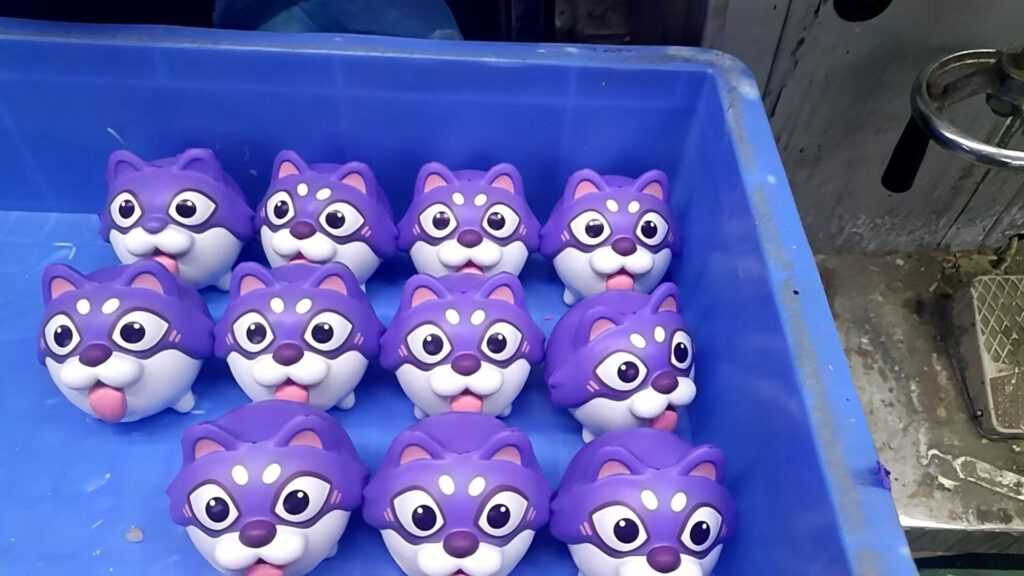
PU foam dog toy
7. Production Quantity
Order quantity also has an important effect on custom PU foam pricing.
Custom projects often require upfront development costs, including:
Product engineering
Prototyping
Mold development
Painting fixtures
Trial production
Process setup
These costs are easier to absorb when spread across a large production run.
For example, if a custom mold costs $5,000:
Producing 500 pieces means $10 of tooling cost per piece.
Producing 10,000 pieces means only $0.50 of tooling cost per piece.
This is a simplified example, but it demonstrates why production volume can have a significant impact on unit pricing.
Higher quantities can also improve production efficiency because the factory can optimize the process and reduce setup time per unit.
Therefore, when requesting a quote, customers should provide the expected order quantity as accurately as possible.
Why Can’t You Get an Accurate PU Foam Price From a Photo?
A product photo can show the appearance of a product, but it normally cannot provide enough information for an accurate manufacturing quotation.
A PU foam manufacturer may need to know:
Product dimensions
3D geometry
Product weight
Foam type
Density
Hardness
Surface finish
Artwork
Number of paint colors
Internal components
Quality requirements
Order quantity
Packaging requirements
Consider two products that look almost identical in a photograph.
One may be a lightweight, simple, single-color product.
The other may contain internal hardware, complex geometry, multiple colors, and strict cosmetic requirements.
Their manufacturing costs can be dramatically different.
For this reason, 3D CAD files such as STP, STEP, or STL are much more useful than photographs when preparing a detailed quotation.
What Information Do You Need to Request a Custom PU Foam Quote?
If you want a manufacturer to provide a more accurate quotation, it is helpful to provide the following information.
Product Information
3D CAD file
Product dimensions
Target weight
Product photos
Technical drawings
Material Requirements
PU foam type
Density
Hardness
Color
Surface finish
Artwork Requirements
Artwork files
Color references
Number of colors
Painting requirements
Printing requirements
Production Requirements
Initial order quantity
Expected annual volume
Target delivery date
Packaging requirements
Quality standards
The more complete the information, the easier it is for the manufacturer to identify the actual cost drivers and recommend the right manufacturing process.
Is the Cheapest PU Foam Quote Always the Best Option?
Not necessarily.
When comparing PU foam manufacturers, it is natural to focus on the unit price.
However, a lower quotation may sometimes reflect differences in:
Material specifications
Quality standards
Painting process
Finishing work
Inspection standards
Tooling
Production efficiency
The real goal should be to find the best balance between price, quality, consistency, and production capability.
A reliable custom polyurethane foam manufacturer should be able to explain what is included in the quotation and why the product costs what it does.
This is particularly important for products that require complex tooling, detailed painting, internal components, or strict cosmetic standards.
Custom PU Foam Cost: A Simple Pricing Framework
Although every project is different, customers can think about PU foam manufacturing costs using the following framework:
Total Manufacturing Cost ≈ Material + Tooling + Labor + Finishing + Components + Quality Control + Production Loss + Packaging
Not every project contains all of these costs to the same degree.
For example:
Simple PU Foam Component
Material cost may be the dominant factor.
Detailed PU Foam Figurine
Painting and manual finishing may become major cost drivers.
Complex Integral Skin Product
Tooling, embedded components, assembly, and production yield may have a greater impact.
High-Volume Product
Tooling and development costs can be distributed across a larger number of units, reducing the effective tooling cost per piece.
This is why a professional manufacturer should evaluate the entire product rather than quote purely on weight.
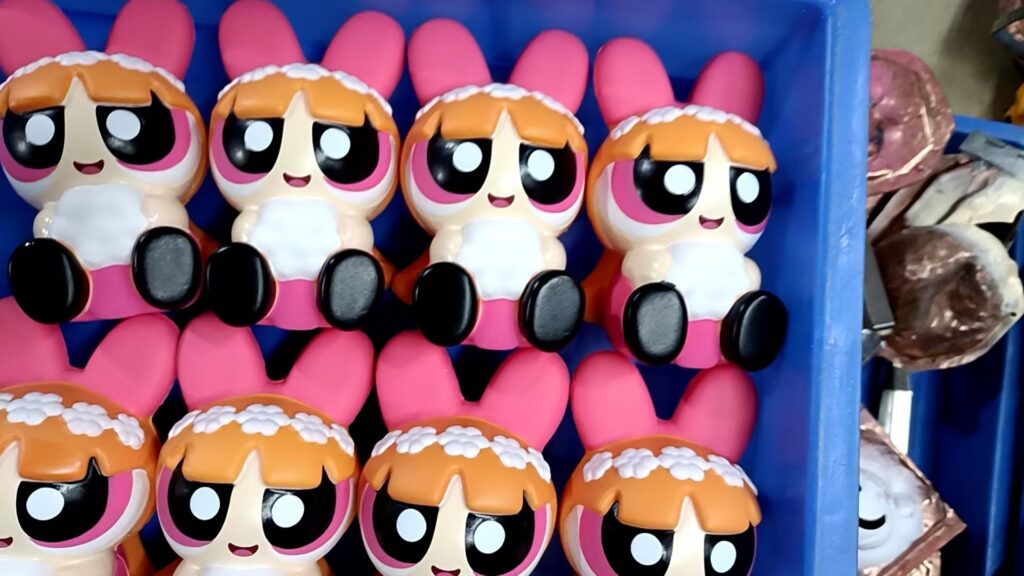
PU foam rabbit
Frequently Asked Questions About Custom PU Foam Pricing
How much does a custom PU foam product cost?
There is no universal price because custom PU foam products vary significantly in size, weight, design, tooling, painting, quality requirements, and production quantity. A manufacturer normally needs product specifications or a 3D drawing to provide an accurate quotation.
What is the biggest factor affecting PU foam product cost?
Product weight is an important basic factor because it affects raw material consumption. However, for detailed products such as PU foam figurines, painting, manual finishing, and artwork complexity can have an even greater impact on the final price.
Does a custom PU foam product require a mold?
In most cases, yes. Custom molded PU foam products generally require dedicated tooling. The mold type and cost depend on the product design, production volume, required durability, and manufacturing process.
Does a more complex PU foam shape cost more?
Usually, yes. Complex shapes require more engineering, more complicated tooling, more difficult demolding, additional trimming, and often more time for painting and finishing.
Does a higher quality requirement increase the price?
Yes. Stricter cosmetic or dimensional requirements can increase inspection, rework, labor, and production rejection rates.
Can I get a PU foam quotation from a product photo?
A photo can help with an initial assessment, but it is normally not enough for an accurate quotation. A 3D CAD file, dimensions, weight, artwork, quality requirements, and expected order quantity will provide a much more reliable basis for pricing.
How can I reduce the cost of a custom PU foam product?
The most effective approach is usually to optimize the product design and manufacturing process before production. Simplifying unnecessary details, optimizing the mold structure, reducing unnecessary painting operations, and providing an accurate production forecast can all help control costs.
Final Thoughts: Understanding the Real Cost of Custom PU Foam Manufacturing
The price of a custom polyurethane foam product is determined by much more than the cost of raw materials.
A lightweight product with highly detailed artwork may be more expensive than a heavier product with a simple design.
Likewise, a simple PU foam component may have a relatively low manufacturing cost, while a complex integral skin product with embedded hardware and strict cosmetic requirements may require significantly more engineering, labor, and quality control.
This is why an experienced custom polyurethane foam manufacturer should evaluate the complete manufacturing process before providing a quotation.
At Ifoama, we focus on customized polyurethane foam manufacturing and help customers move from product concepts and 3D designs to prototypes, tooling, production, finishing, and final products.
If you are developing a new PU foam product, send us your STP, STEP, STL, technical drawing, product photo, or physical sample together with your expected quantity and quality requirements.
Our team can evaluate the design, tooling requirements, manufacturing process, and production volume to help you understand the major cost drivers and develop a practical production solution.
Looking for a custom PU foam manufacturer? Contact Ifoama to discuss your project and request a quotation.
Sam
Greetings to all! I'm Sam, the driving force behind ifoama.com. As specialists in the realm of Polyurethane Foam Products, our mission is to craft the finest. Dive into these articles to explore insights about our offerings and the broader industry landscape. Your thoughts and feedback are always valued here. Join the conversation!